
From the start of the 2026/27 season, no English Premier League club can carry a gambling company on the front of its matchday shirt.
The voluntary agreement was announced in 2023 following consultation between the league, its clubs and the UK government. It made the Premier League the first professional sports league in the UK to collectively remove front-of-shirt gambling sponsorship.
North of the border, there is still no equivalent league rule.
The SPFL said after the Premier League announcement that it had no plans to impose a similar ban, and no Scottish league-wide prohibition has since been announced. Individual shirt partnerships remain a matter for the clubs.
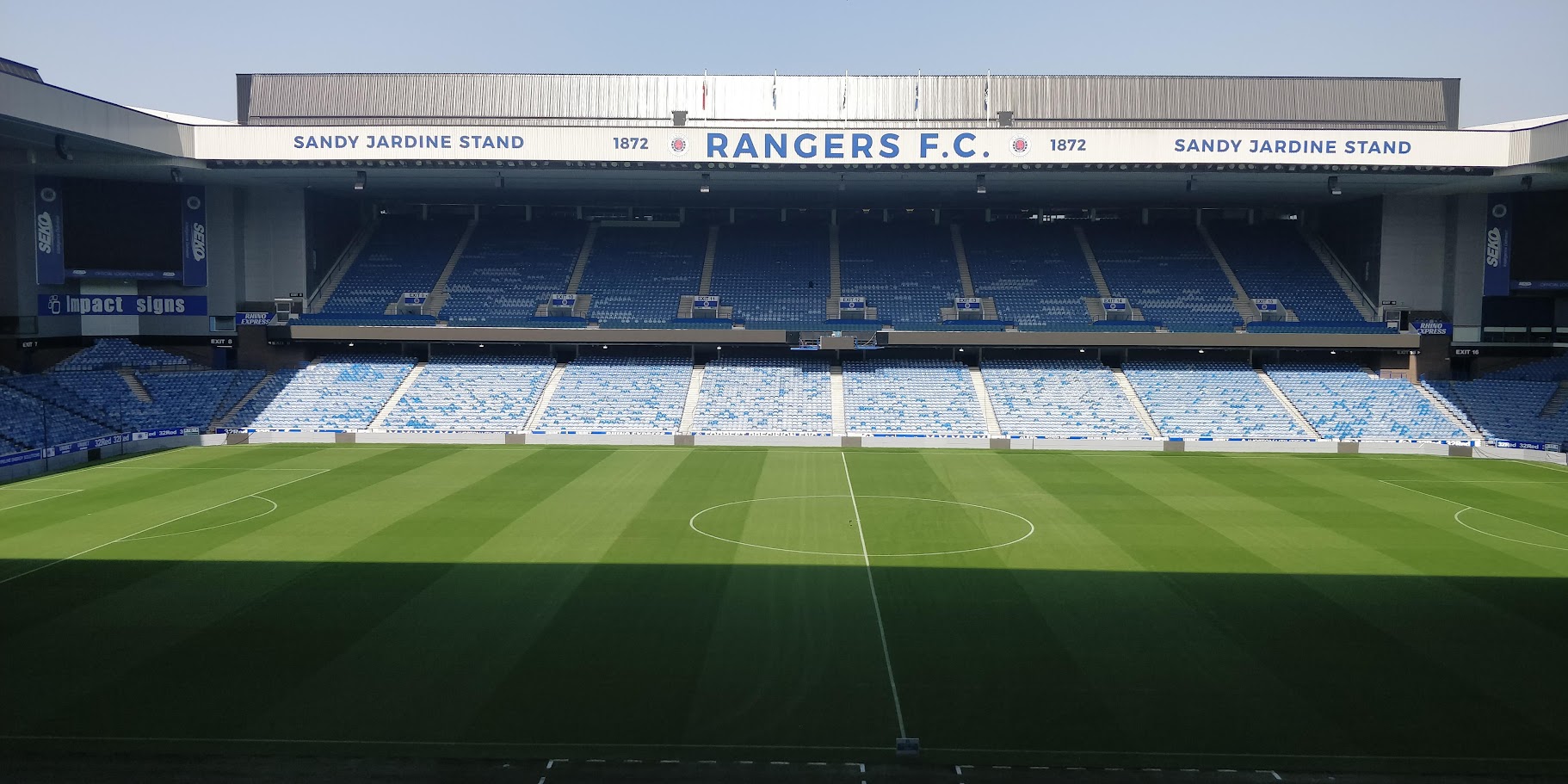
That means Rangers, Celtic and Dundee United can continue carrying betting or casino brands on the front of their men’s shirts while every Premier League club removes them.
For a Rangers support that spends plenty of time debating the club’s commercial direction, it is a divide worth understanding properly rather than reacting to on instinct.
The money is not incidental
The commercial argument is straightforward.
For many Scottish clubs, sponsorship represents a meaningful source of revenue in a league where the financial margins outside the biggest teams are unforgiving. The money supports general club operations and can contribute to playing budgets, staffing and community work.
English football illustrates the sums involved.
When the Premier League agreement was announced in 2023, eight top-flight clubs had front-of-shirt gambling sponsors worth an estimated £60 million a year collectively. The number of clubs using betting brands later increased before the ban came into effect.
The English Football League has taken a different position. Sky Bet remains its title partner under an agreement the EFL describes as the largest title-sponsorship deal in its history. The full annual rights fee has not been publicly disclosed.
Scotland’s numbers are smaller, but the relationship with the gambling sector remains highly visible.
Rangers carry Unibet on the front of the men’s first-team shirt. The club has also had a long association with 32Red. Celtic continue their partnership with Dafabet, while Dundee United have QuinnCasino as their principal shirt sponsor.
That is three of the Scottish Premiership’s 12 clubs.
The SPFL itself also has a major gambling partnership. William Hill became the title sponsor of all four SPFL divisions in 2024 under a five-year agreement running to 2029.
Scottish football is therefore not simply allowing individual clubs to make their own decisions. Gambling sponsorship is embedded in the league’s wider commercial structure.
A particularly valuable audience
The duration of these partnerships also tells a story.
Analysis by Ampere found that gambling-related football sponsorships in Scotland tended to last just under four years, compared with slightly more than two years in England.
Longer deals suggest that both clubs and sponsors see value in continuity.
Ampere’s consumer research also indicated that Scottish Premiership viewers who gamble were more likely than Premier League viewers to report higher weekly betting expenditure.
That does not mean every Scottish supporter bets, or that football audiences can be reduced to their value as gambling customers. It does help explain why operators continue to consider Scottish football commercially attractive.
In industry terms, it is an engaged market.
The English ban is narrower than it sounds
The Premier League agreement should not be mistaken for a complete break between English football and gambling.
It covers the front of matchday shirts only.
Gambling companies can still appear on sleeves, LED advertising boards and other stadium or commercial inventory. Clubs can retain official betting partnerships, while gambling advertising remains prominent around broadcasts and online football coverage.
Campaign groups have therefore argued that the change may displace exposure rather than remove it.
A betting logo may disappear from the centre of the shirt while remaining visible elsewhere throughout the matchday experience.
The issue became more complicated during 2026 as attention turned toward football partnerships involving gambling companies without British licences.
Entain first pressed the Premier League to act against such sponsorships. It later approached the Independent Football Regulator and wrote directly to six clubs with links to operators that were not licensed in Great Britain.
Entain’s public argument centred on consumer protection. British-licensed companies must follow UK rules covering areas such as customer checks, self-exclusion and safer gambling controls. Unlicensed operators are not supervised under the same UK Gambling Commission regime.
There is also an obvious commercial dimension. Licensed operators pay British taxes and compliance costs while competing against companies that may not.
The debate is therefore no longer simply about whether gambling companies should sponsor football. It is also about which gambling companies should be permitted to do so.
What supporters actually encounter
The shirt-sponsorship question is a proxy for something larger: how thoroughly betting has become embedded in the experience of following football.
It appears on shirts, advertising boards and social media. It appears in broadcast breaks, odds graphics and the accumulator someone posts in the group chat before kick-off.
The online casino sector sits alongside that wider betting culture. International platforms such as BetUS Casino form part of a global market that has expanded enormously over the past decade.
Jurisdiction matters, however.
An operator without a British licence is not supervised under the UK Gambling Commission’s licensing and consumer-protection framework. It is also not authorised to target customers in Great Britain.
A licence from another jurisdiction should not be confused with permission to operate in the British market.
That distinction may sound technical, but it determines which regulator a customer can approach, which consumer safeguards apply and whether the company is legally permitted to market its services locally.
It is also the distinction at the centre of the current political debate over unlicensed gambling sponsorship.
What a Valid Gaming License Actually Means
A valid license means a third party has reviewed the site's operations, financial practices, and game fairness before allowing it to serve players. Licensed casinos are subject to audits and must meet minimum standards for player protection. That accountability layer matters, even in a decentralized space.
Where this leaves Rangers
None of this produces an easy moral answer.
A club with European ambitions and an expensive rebuild needs to maximise legitimate commercial income. Sponsorship revenue from a properly licensed and compliant operator is lawful money that can support the football operation.
The competitive argument is obvious.
If Rangers rejected gambling sponsorship while Celtic continued accepting it, many supporters would view the decision as unilateral commercial restraint in a league dominated by two clubs.
That does not prove that an alternative sponsor could not be found, or that a different commercial identity would have no value. It explains why walking away is more difficult than simply declaring the principle.
The criticism is equally difficult to dismiss.
Betting brands are promoted in a football environment followed by children and young people. Repeated exposure can make gambling appear like a normal and inseparable part of supporting a team.
That matters in a country where gambling-related harm remains a documented public-health concern.
A partnership can be legal, commercially valuable and still raise legitimate questions about the message it sends.
Independent Audits and Third-Party Certifications
Beyond licensing, trustworthy casinos commission regular audits from independent testing labs. These audits verify that RNG (Random Number Generator) systems function correctly and that payout percentages match what's advertised. Look for certification badges from established auditing organizations. Their presence confirms the site welcomes outside scrutiny, which is exactly the attitude a legit casino should have.
What could change next
Scotland may eventually face tighter restrictions, but it is important to distinguish between different proposals.
The Premier League’s voluntary rule removes all gambling brands from the front of shirts, including licensed ones.
The more immediate UK-wide political pressure concerns sponsorship by operators that do not hold a British gambling licence. The government has considered restrictions that could prevent such companies from sponsoring British sports teams.
That would not automatically remove licensed brands such as Unibet or Dafabet from Scottish shirts. Nor would it amount to the SPFL copying the Premier League’s front-of-shirt policy.
The Independent Football Regulator is also focused on the English men’s professional game. It does not have direct authority over Rangers, Celtic or the SPFL.
Any broader Scottish change would therefore require action from the SPFL and its clubs, gambling legislation applying across Great Britain or intervention from the Scottish or UK governments within their respective powers.
For now, Ibrox can continue carrying a betting brand while no Premier League club will be permitted to do the same on the front of its matchday shirt.
Scottish football is making a commercial calculation that the Premier League has decided to limit.
Whether that is pragmatism or short-termism depends on which risks appear more important: the income a club could lose today, or the social and reputational cost of maintaining the relationship tomorrow.
18+. Please gamble responsibly. Free and confidential support is available 24/7 through GamCare’s National Gambling Helpline on 0808 8020 133.