

In this section you can find a list of Rangers managers and all those who have held the position of manager of the first team of Rangers, since its formation in 1872.

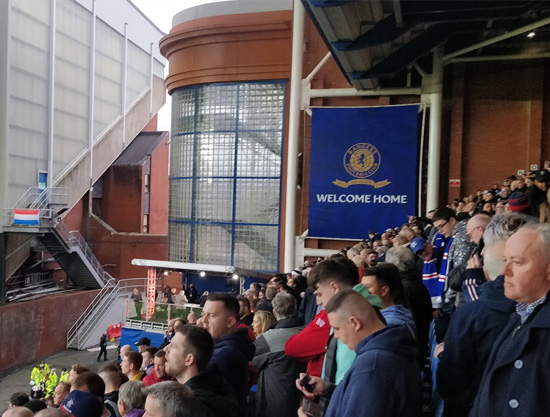
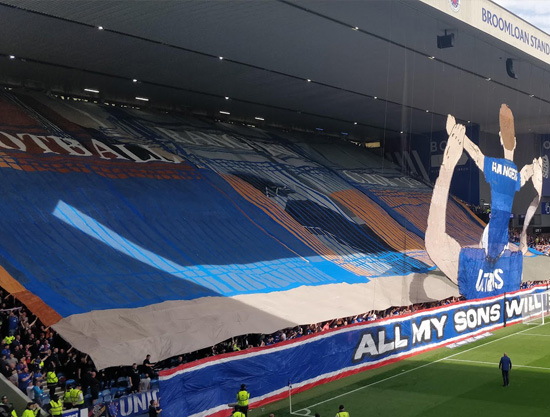
Ibrox Stadium is a football stadium located on the south side of the River Clyde, on Edmiston Drive in the Ibrox district of Glasgow. It is the home ground of Scottish Premier League club Rangers and has an all-seated capacity of 51,082. Ibrox is presently the third largest football stadium in Scotland and tenth largest stadium in the United Kingdom. You can view a full gallery of stadium images below this article.

The Rangers reserve (or 'A') team - originally known as the Swifts - are Scotland's most successful reserve team. Their colours were red and black vertical strips (ala AC Milan) which represented Govan.

From hooped shirts and socks (yes, hoops!), to white shirts, to light blue tops, to different sponsors and badges; all data available on the strip is available from Dave Moor at the excellent Historical Kits. A huge thanks to his website for taking the time and effort to painstakingly reproduce each kit from our history.

The Rangers Training Centre opened in 2001; cost £14million and is situated in Milngavie - to the North West of Glasgow. It was named after previous Rangers owner and Chairman Sir David Murray and was originally commonly known as Murray Park. In 2012, after the 1899 company's liquidation due to financial mismanagement of the club, the fans decided to remove the disgraced former owner's name from the centre.

There are a few mitigating circumstances as to how yours truly landed with the unenviable task of detailing the contribution John Greig MBE has made to Rangers over his distinguished and well documented career. Firstly, I stupidly announced that I have some spare time on my hands at the moment, and actually volunteered this idea in the Gersnet writers forum. Secondly, John Greig was Rangers manager when I started going to watch Rangers on a regular basis. I was lucky enough to witness John as a player (and what a player he was) and given the fact of his illustrious playing career, I felt it unfair to solely focus on his managerial career (as was the thought at the time).
No one who witnessed Rangers’ 2nd treble in 3 seasons when we defeated Aberdeen 2-1 in the Scottish Cup Final at Hampden would believe that the man hugged and congratulated by Jock Wallace would be invited to replace Wallace as manager of Rangers. There are many rumours circulating as to why Jock Wallace left Rangers in 1978 but to say it was a shock would be an understatement. Jock Wallace epitomised Rangers and was a very successful and shrewd coach/manager. His departure left a gaping void and the board hoped that John Greig would be the man to fill this void.

The name of Archibald Leitch might not be well known to many fans but if ever a man who was not a footballer deserves his name on the Ibrox Hall of Fame it's he. Born in Glasgow, Leitch became football clubs' stadium architect of choice. His stands and terraces could be found at every major ground in the country. Millions of fans stood on and loved the terraces that he created - Manchester United, Arsenal, Chelsea, Aston Villa, Fulham and many more all had Archie to thank; for it was him that designed and constructed their footballing homes.